
![Sustainable logistics: Benefits & key trends for 2024 [+how to make your business sustainable]](/_next/image?url=%2Fblog%2Fsustainable-logistics-featured.jpg&w=1920&q=75)
Sustainable logistics can help reduce the carbon footprint in the shipping industry. Read this blog to know the benefits, key sustainability trends, and how to make your business sustainable easily.
The shipping industry contributes significantly to the pollution of our planet, and empty container repositioning is a major contributor to this. With every third container being moved empty, it’s not just a logistics problem but also a major environmental problem.
When a container moves empty you also have to pay additional costs to move your containers to a surplus location. It’s an unnecessary usage of resources that can be avoided.
If you’re wondering how to avoid this, we’ve got the right solution for you. With the Container xChange leasing marketplace, you can put an end to empty container repositioning by leasing your containers for one-way moves.
Connect with 1,700+ vetted members and put your containers on lease. This way, you move your container to your desired location and reduce unnecessary shipping emissions.
Use the public search below to find partners and lease your containers easily!
What is sustainable logistics?
Sustainable logistics refers to the practice of managing logistics operations in a way that minimizes environmental impact. This involves using energy-efficient transportation, reducing waste, optimizing resource use, and adopting eco-friendly technologies. The goal is to balance efficiency and environmental responsibility while maintaining a cost-effective supply chain.

Why is sustainability in logistics necessary?
The shipping industry has a significant impact on the environment, making logistics sustainability important. Let’s find out more.
Air pollution
The shipping industry is a major contributor to global air pollution through shipping emissions. The industry releases large amounts of greenhouse gases like carbon dioxide, sulfur dioxide, carbon monoxide, etc. According to the Learn more (IMO) GHG study, maritime transport emitted around 1,056 million tonnes of carbon dioxide in 2018 and is responsible for about 2.89% of global GHG emissions.
Noise pollution
Shipping vessels generate a lot of noise in the ocean. This causes both short- and long-term consequences for marine life, especially for mammals. Sound is very important in the life functions of marine mammals. It helps them sense their surroundings, locate food, communicate, and protect themselves.
Vessel discharge
Shipping vessels are responsible for dumping plastic and broken shipping equipment into the oceans. Vessels also empty waste, including sewerage and bilge water. Moreover, 10-15% of oil and 20% of marine litter that enters the ocean comes from the shipping industry. This number increases further in the event of an accidental oil spillage from any vessel. For example, the Learn more from MV MSC Apollo in South Africa affected the local wildlife of the area.
Maritime species invasion
Another threat to marine life from the shipping industry comes from the introduction of invasive species. The release of ballast water introduces non-native organisms and invaders that affect the marine ecosystem negatively.
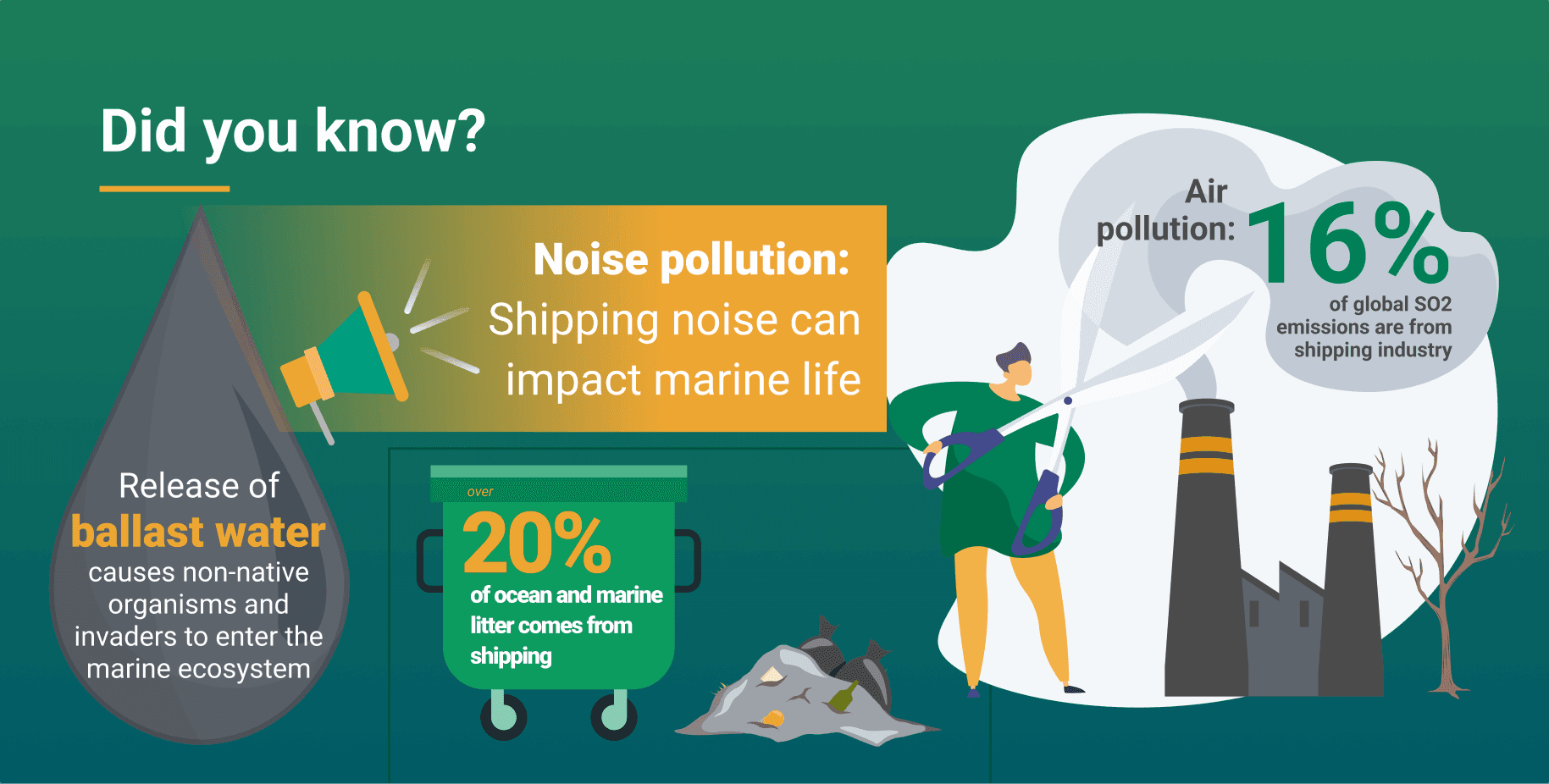
Now you know the different ways the shipping industry impacts the environment. This will be a good time to understand the importance of sustainability in logistics and transport.
What is the importance of sustainable green logistics?
The importance of sustainable logistics includes a reduction in carbon footprint, improved brand reputation, and cost efficiency, among many others. Read on to learn about this in detail.
Reduces carbon footprint
We’ve already discussed above how much the maritime industry is responsible for carbon emissions. Sustainable logistics helps reduce these emissions by adopting eco-friendly practices like using cleaner fuels and energy-efficient technologies. By minimizing the carbon footprint, your business can play a vital role in reducing global pollution levels.
Improved brand reputation and customer relations
Companies that embrace sustainable logistics can significantly boost their image as environmentally responsible businesses. Customers are increasingly looking for brands that prioritize eco-friendly practices. By adopting green logistics solutions, you can improve your public perception and attract clients.
Improves compliance with government guidelines
Governments worldwide are tightening environmental regulations, and sustainable logistics helps companies stay compliant. For example, the EU Emissions Trading System (EU ETS) sets limits on CO2 emissions and encourages businesses to adopt greener practices. By adhering to these regulations, you can avoid penalties and contribute to a more sustainable future.
Cost efficiency
Adopting green shipping initiatives such as energy-saving technologies and fuel-efficient transportation, can lead to lower operational costs over time. Reduced energy consumption and better resource management can also help your business cut expenses in logistics.
Resource optimization
Sustainable logistics emphasizes the efficient use of resources by reducing waste and maximizing output. One of the key challenges in logistics is empty container repositioning, where containers are moved without any cargo, leading to wasted resources, increased costs, and global carbon dioxide emissions.
That’s where xChange can help through SOC containers. By leasing your containers, you can avoid the costly process of repositioning empty containers.
On the Container xChange leasing marketplace, you can put your containers on lease, allowing other companies to use them for transportation. This not only improves resource optimization but also enhances cost efficiency by reducing idle transport and generating additional income for your business.
Click on the banner below to learn more about putting your containers on lease and how to make your business more sustainable.

7 key sustainability trends and practices in 2024
The International Maritime Organization has set a target to reduce emissions by at least 50% by 2050. To achieve this target, governments and businesses have taken various measures; here are a few of those trends and practices.
Green shipping corridors
Green shipping corridors are specific trade routes that aim to promote zero-emission shipping solutions. These corridors serve as testing grounds for innovative technologies and fuels, enabling the shipping industry to reduce greenhouse gas emissions.
In 2023, the number of green shipping corridors doubled from 21 to 44, as reported by the Learn more. This demonstrates the industry’s commitment to sustainable shipping practices.
Clydebank Declaration Learn mores an agreement signed by 27 countries, including the US and Canada. This initiative aims to establish zero-emission maritime routes between two or more ports. These routes will use clean fuels like methanol and ammonia to reduce the environmental impact of global shipping.
The signatories have committed to creating at least six green corridors by the middle of this decade, with plans to expand the number, length, and frequency of these routes by 2030.
Dual-fuel ships
Dual-fuel ships, which can operate on both conventional fuel and alternative energy sources like ammonia or methanol, are emerging as a sustainable option for the shipping industry.
According to the Learn more, investing in a dual-fuel vessel and using e-fuels can help companies comply with FuelEU and ETS regulations. Over a ship’s lifetime, this approach can save up to 10% in total cost of ownership (TCO) compared to conventional engines.
This technology also enables shipping companies to adapt to evolving fuel standards while maintaining operational flexibility.
Adopting alternative fuels
Alternative fuels such as biofuels, hydrogen, ammonia, methanol, and solar energy are becoming increasingly popular in the shipping industry. Biofuels offer a cleaner alternative to traditional fossil fuels, while hydrogen and solar power present opportunities for emission-free operations.
Optimizing shipping routes
Optimizing shipping routes is another critical trend in reducing fossil fuel consumption and emissions. The Northern Sea Route, for instance, gained attention as a shorter passage between Europe and Asia amidst the Red Sea shipping However, it faced criticism due to environmental concerns in the Arctic region, where increased shipping could have disrupted marine ecosystems and glaciers.
Reverse logistics sustainability
Reverse logistics refers to the movement of goods from the end customer back to the retailer or manufacturer, often for returns, repairs, or recycling. By improving reverse logistics, your business can minimize the environmental impact and support a circular economy.
Sustainable ports
sustainable ports are crucial to the green logistics ecosystem. These ports are designed to minimize environmental impact through energy-efficient infrastructure, waste management, and the adoption of clean energy technologies. Sustainable ports play a pivotal role in reducing the carbon footprint of global shipping operations.
These are just a few of the many practices that companies are following. If you want to keep up with the trends in the shipping industry and tips on how you can make your business more sustainable, subscribe to our monthly newsletter, and get insights delivered straight to your inbox.
Sustainability industry trends: Initiatives by shipping companies
Several leading shipping companies are taking significant steps toward sustainability by adopting cleaner technologies and alternative fuels. Here’s a closer look at their efforts.
Hapag-Llyod
In 2023, Hapag-Lloyd adopted over 200,000 tonnes of biofuels and introduced new dual-fuel vessels that can run on LNG. The company has also joined the Green Corridor Consortium, which aims to reduce emissions on the shipping route between Rotterdam and Singapore. By using biofuels and dual-fuel ships, Hapag-Lloyd is positioning itself as a leader in sustainable shipping.
Maersk
Maersk has set an ambitious target to achieve net-zero emissions by 2040. It has invested heavily in methanol-powered ships and partnered with various stakeholders to develop and scale up the production of green fuels like e-methanol and bio-methanol. Maersk is also exploring the potential of nuclear-powered container ships as part of its long-term strategy to reduce its environmental footprint.
CMA CGM
CMA CGM is focusing on reducing greenhouse gas emissions by investing in a fleet of LNG-powered ships. The company has set a goal of achieving carbon neutrality by 2050. In addition to alternative fuels, CMA CGM is also exploring energy-efficient technologies to enhance the sustainability of its supply chain management.
MSC
MSC (Mediterranean Shipping Company) is upgrading its fleet with energy-efficient technologies to reduce fuel consumption and emissions. The company is working with ports to develop green shipping corridors and implement sustainable port practices, further contributing to the reduction of maritime emissions.
Evergreen Marine
Evergreen Marine is designing eco-friendly ships that are more fuel-efficient and produce fewer emissions. The company is actively exploring alternative fuels like hydrogen and ammonia to meet the growing demand for sustainable supply chains.
Now that you know how major shipping companies are making their businesses sustainable, it’s time to see how you can achieve sustainability for your business as well.
How to make your business sustainable?
Sustainability in logistics is not just about reducing emissions but also about optimizing every aspect of the supply chain. Here are some practical tips to help you adopt sustainable logistics practices.
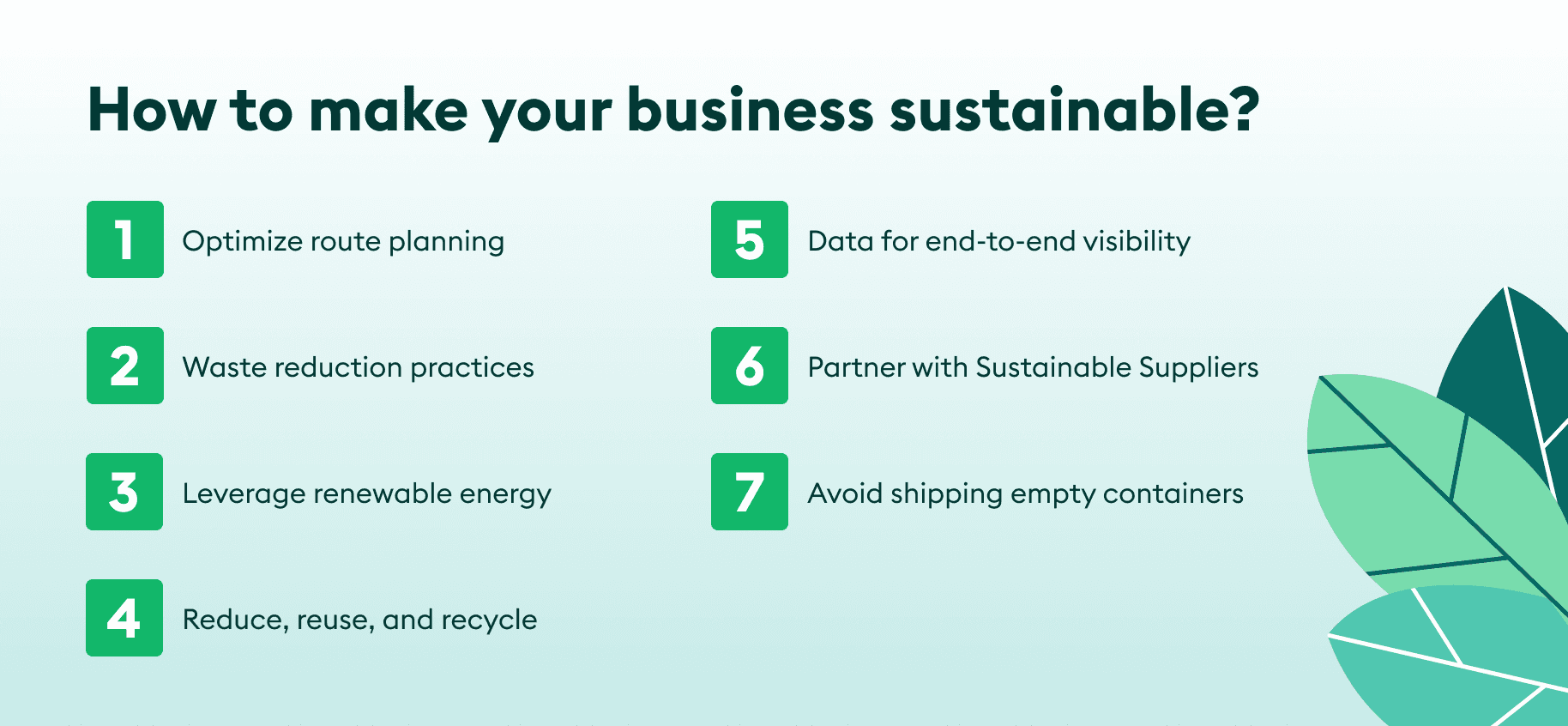
Optimize route planning
Using technology to optimize shipping routes can help you minimize fuel consumption and reduce travel time. For example, the Panama Canal railway and China-Europe Railway Express are examples of infrastructure that can improve efficiency by offering quicker and more sustainable transportation options.
Implement waste reduction practices
You can reduce packaging waste by using sustainable packaging. By recycling materials throughout the supply chain, your business can significantly lower its environmental impact.
Leverage renewable energy
Transitioning to renewable energy sources like solar or wind power for logistics operations and warehouses is a vital step towards adopting sustainable practices. These clean energy solutions can power large operations with minimal environmental impact.
Reduce, reuse, and recycle
You can modify shipping containers for multiple uses rather than discard them when they’re not in prime shipping condition. Reusing containers also helps reduce waste. For example, a cargo-worthy container can make an excellent shed for your home.
Harnessing available data for end-to-end visibility
Data is essential in logistics management, helping companies reduce inefficiencies and improve resource utilization. Keeping track of your containers throughout their journey ensures better planning, prevents delays, and reduces the chances of misplaced or idle containers.
However, using multiple platforms to track individual containers can be time-consuming and lead to fragmented information. You can avoid this by using our all-in-one Container xChange platform which allows you to buy containers and also easily track them. This simplifies operations, reduces administrative burdens, and enhances decision-making through efficient container management.
Partner with sustainable shipping companies
Collaborating with companies that prioritize environmentally friendly practices can also help your business reduce its carbon footprint. On the Container xChange marketplace, you can connect with 1,700+ shipping companies to find suppliers that align with your sustainability goals. We’ll discuss more about this in the next section.
Avoid shipping empty containers
Image this: Your company wants to transport 50 containers from China to Ireland. The containers are filled with cargo because China is an export hub.
However, your company doesn’t have any customers in Ireland who can use your containers for exports. Now your boxes are stuck. Your company will have to reposition them to other ports where they can be used again.
Moving 50 empty containers back is not sustainable. Moreover, it’s not just your company that faces this challenge. Empty container repositioning is a major industry problem and costs more than $20 billion yearly.
Transporting empty containers causes the same amount of pollution as it would moving containers filled with cargo. Going back to the example, imagine if you can find customers in Ireland to use your containers. It’d save you money and help your company become more sustainable, as you won’t be moving any empty boxes.
But how do you find partners who will move your containers? Right here on xChange. Let’s see how we can help you do this.
Curb empty container repositioning with xChange
At xChange, we offer you a neutral marketplace to find trustworthy partners for one-way container moves. All you have to do is put your containers for lease on the xChange leasing marketplace and find partners who will move your containers for you.
Once you become a member with us, you also get all the following benefits.
– Secure partners: All our members go through a mandatory background check. This ensures safety and trust amongst new partners. On top of this, all companies have public profiles You can see the ratings and reviews of companies from previous partners and then decide whether to work with them or not.
-Negotiate the best prices: At xChange, you get to choose the prices that fit your needs from the various options. All the prices you see on the platform are stated upfront without any hidden charges and are negotiable. We follow a zero-commission policy. Your company can also directly connect with these companies and negotiate deals.
-Make secure transactions: Your company can make or receive secure payments through the xChange wallet. This ensures that all transactions are safe. By using learn more about xChange Wallet you can also minimize the transactions and exchange fees.
-Choose from 1,700+ members globally: On our platform, you can connect with trading and leasing companies globally. You don’t have to rely solely on your contact list or your local sources to find trustworthy partners when you can easily become a member at xChange and browse through 1,700+ members in 2,500+ locations.
Ready to reposition your empty containers and make your business more sustainable? Click on the banner below to connect with trusted members and move your boxes.

What is meant by sustainable logistics?
Sustainable logistics refers to the process of planning, managing, and executing logistics operations in a way that minimizes environmental impact. This involves reducing emissions, conserving resources, and optimizing supply chain efficiency.
What are the three pillars of sustainable logistics?
The three pillars of sustainable logistics are environmental protection, economic efficiency, and social responsibility. Together, these pillars ensure that logistics practices are both eco-friendly and beneficial for businesses and communities.
How to make logistics more sustainable?
Logistics can be made more sustainable by optimizing routes to reduce fuel consumption, adopting renewable energy sources, using eco-friendly packaging, and partnering with suppliers who prioritize sustainability.